
“It didn’t just break the rules. It wrote new ones.“
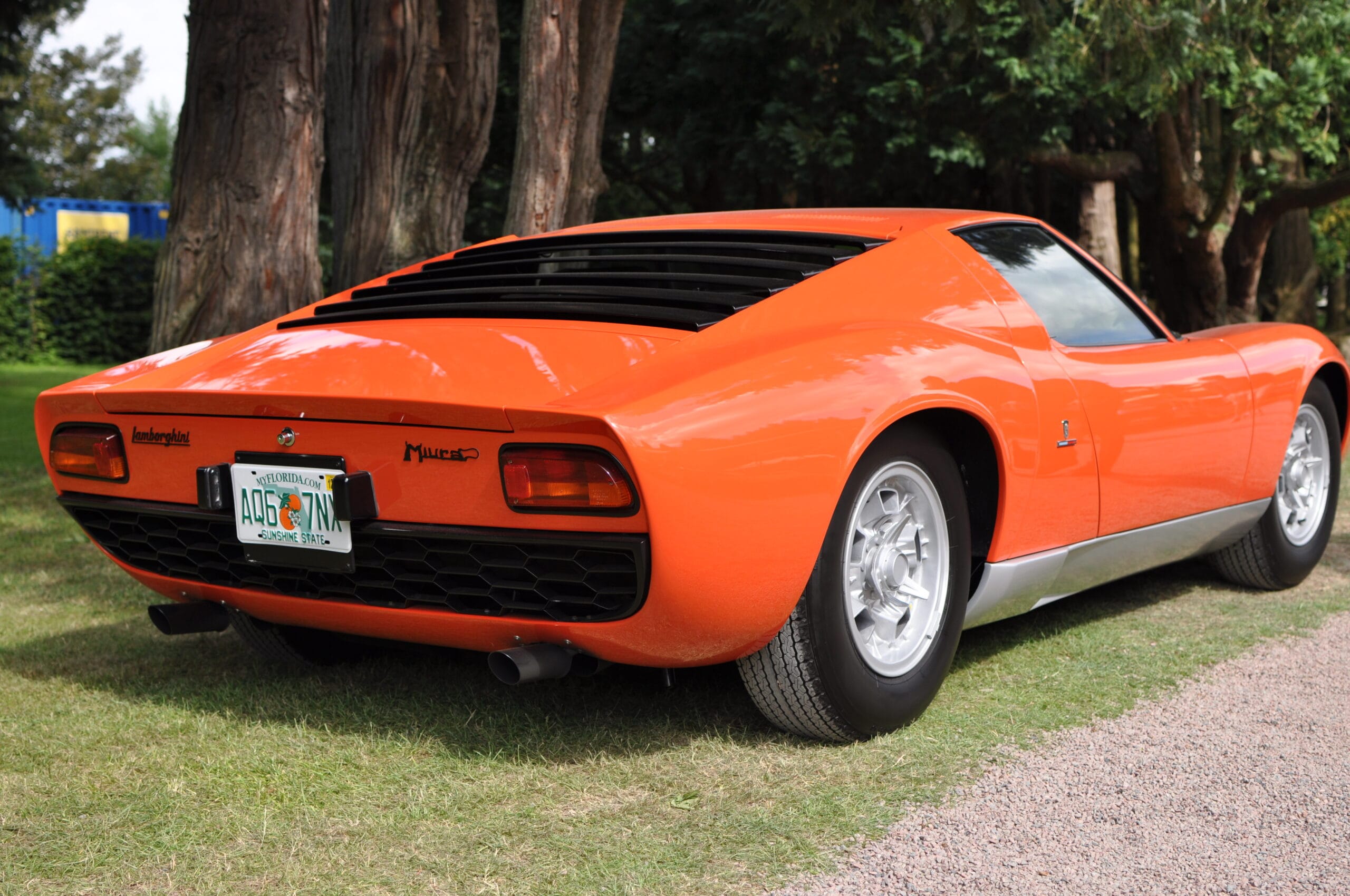
The Lamborghini Miura didn’t arrive quietly. It arrived sideways, screaming – on the cover of every serious car magazine, in the fantasies of every design student, and in the nightmares of engineers who suddenly realized the world had changed.
Launched in 1966, the Miura is often called the world’s first supercar. But that label doesn’t do it justice. Yes, it had a transversely-mounted V12 engine, yes it was low and wide and mid-engined, but what really set the Miura apart was its emotional design.
Designed by instinct, not by committee
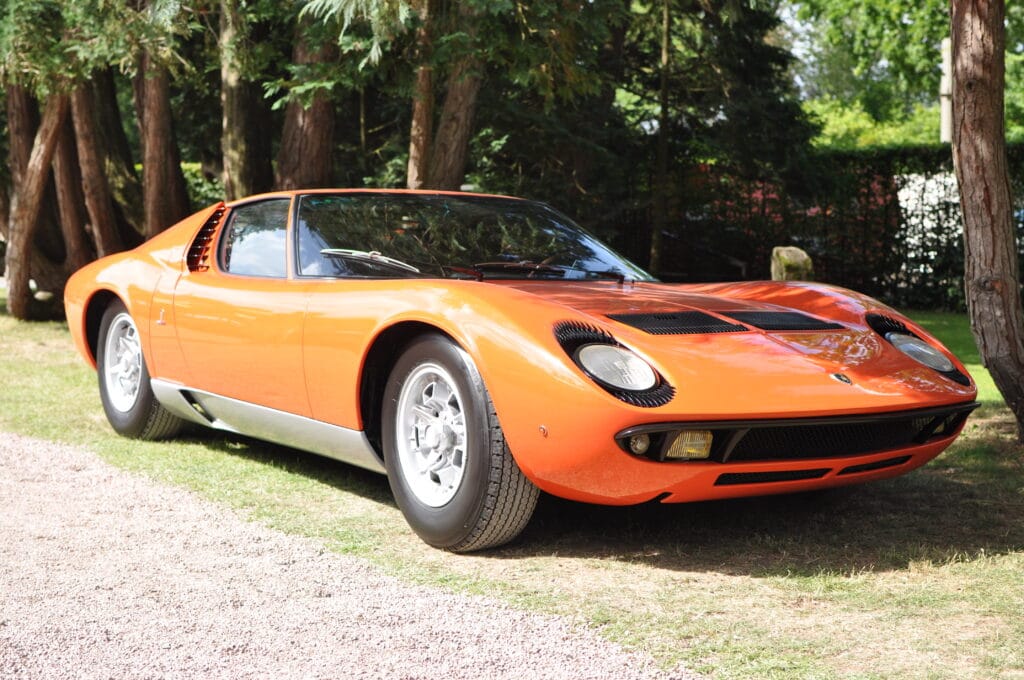
Marcello Gandini, just 27 years old and working for Bertone, drew a shape that looked like it had melted across the floor – all curves, no angles. The Miura’s silhouette was unapologetically seductive, with wide hips, a low-slung stance and eyelash-covered headlights that made it feel alive. It was not an evolution. It was a revolution.
Inside, it was cramped and borderline impractical. But that didn’t matter. The Miura was never about perfection. It was about provocation.
More than speed – it was theatre
Driving a Miura wasn’t just fast, it was cinematic. The noise, the smell, the slightly terrifying lift at speed – every drive was an event. Ferruccio Lamborghini wanted to make a statement, and the Miura became a poster child for 60s hedonism: wild, free, unapologetic.
Miuras were seen outside Riviera casinos, driven by rockstars and royalty, and immortalised in films. It wasn’t just a car. It was a symbol.
Why it still matters
More than 50 years later, the Miura still stops people in their tracks. It reminds us that great design doesn’t ask for permission. It doesn’t aim to please everyone. It simply is – confident, bold, and beautiful.