
“It didn’t just go to the Moon. It went into history.”
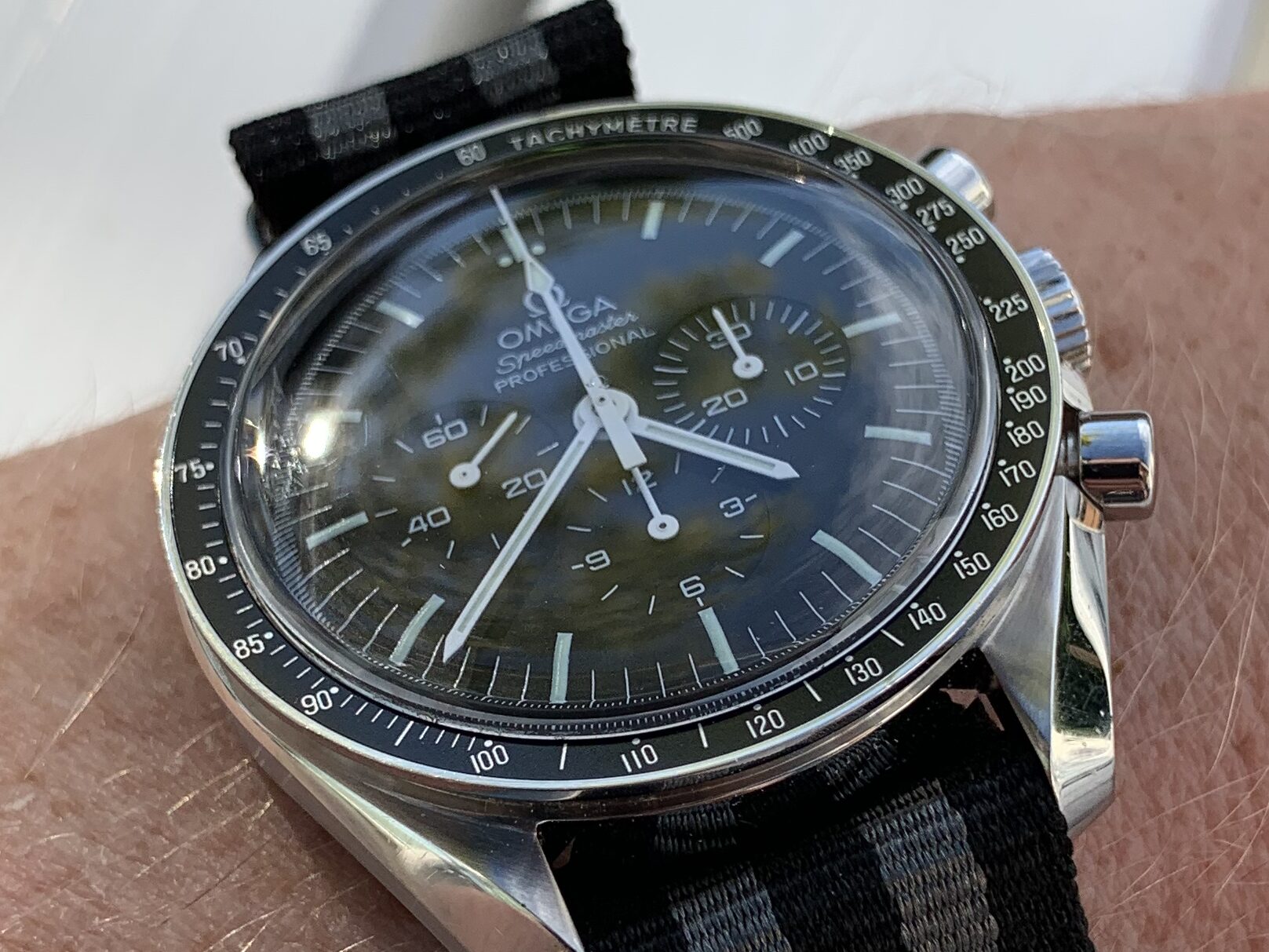
The Omega Speedmaster Professional – the “Moonwatch” – is more than just a timepiece. It’s a monument. Worn on the wrists of Apollo astronauts, it became the first watch on the Moon on July 20, 1969. But its legend isn’t built on marketing. It’s built on function, failure, and flawless timing.
From pit lane to space race
Launched in 1957 as a chronograph for motorsport, the Speedmaster wasn’t intended for space. But when NASA tested watches for durability, accuracy and toughness, it was the only one that passed. No modification needed. No branding collaboration. Just mechanical excellence.
The result? A chronograph certified for lunar exploration, strapped to the outside of pressure suits, measuring time in a vacuum.
Form that follows function – and survives extremes
The Speedmaster’s 42 mm case, twisted lugs and hesalite crystal weren’t designed to look cool. They were designed to work. The black dial with white markers made reading easy under stress. The tachymeter bezel was bold, utilitarian, perfectly legible.
Even the hesalite crystal – often replaced today with sapphire – was used because it wouldn’t shatter in zero gravity.

The chronograph with character
Inside beat the Lemania-based Caliber 321 (later 861), a manually wound movement as tactile as it was precise. Operating a Moonwatch chronograph is a mechanical experience: solid clicks, deep resets, purposeful pushers.
It’s not about the complication. It’s about the connection.
Why it still matters
More than 50 years later, the Speedmaster is still in production – and still worn by astronauts. But more importantly, it’s worn by those who value clarity, utility, and permanence.
It’s not just a watch with history. It’s a watch that made history.