
“Before it became a symbol, it was a survival tool.”
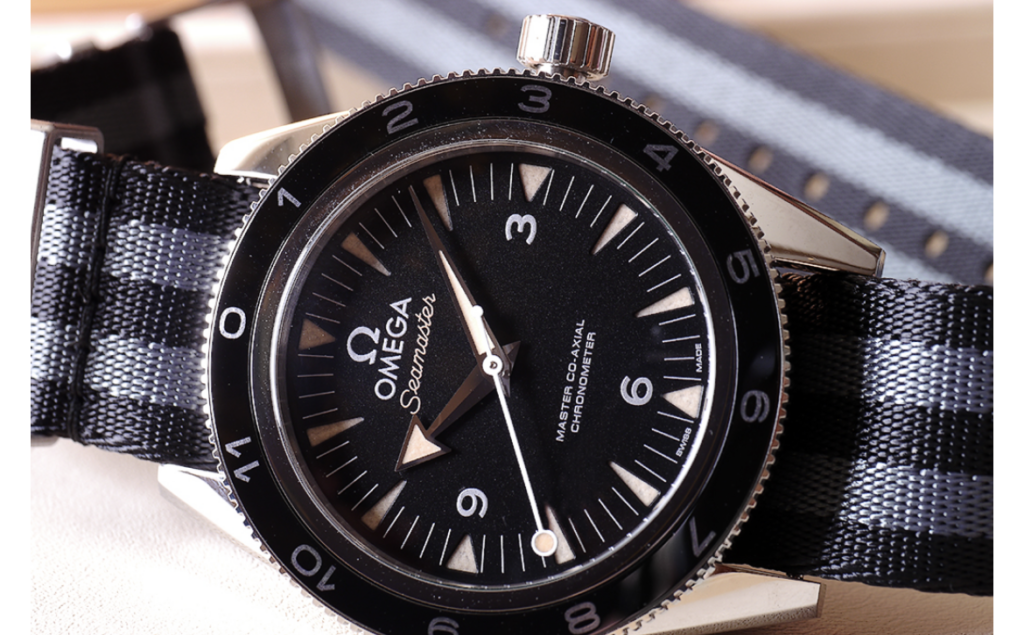
The Omega Seamaster 300 wasn’t made to impress. It was made to endure. Introduced in the late 1950s and perfected by the early 1960s, the Seamaster 300 (ref. CK2913 and later 165.024/166.024) was born into an era when the sea was still a frontier.
This was no luxury accessory. It was a tool – for divers, for explorers, for those who needed absolute clarity under pressure. But over time, it became something more: a quiet icon of restrained purpose and enduring design.
Designed for depth, admired on land
With its broad arrow hands, rotating bezel, and legible dial, the Seamaster 300 communicated one thing: function first. The dial wasn’t decorative – it was engineered for visibility in dark, cold waters. The crown guards? Sculpted protection. The matte dial and tritium lume? Calm confidence.
It wasn’t trying to be beautiful. That’s why it is.
More than just a diver
The Seamaster 300 didn’t just appeal to professionals. Its proportions made it wearable, its legibility made it attractive, and its understated character made it timeless. It had the bones of a toolwatch but the manners of a dress piece.
Worn by military divers, engineers, journalists, and everyday explorers, it became a quiet statement: I go my own way.
A study in balance
There’s something deeply satisfying about how the Seamaster 300 wears. The twisted lugs catch the light without showing off. The bezel clicks with purpose. The dial has depth without decoration. Every detail feels resolved – as if the watch was carved from intention.
Why it still matters
Vintage Seamaster 300s are now among the most sought-after Omega references. Not because they’re flashy, but because they’re honest. They represent a time when watches were made to serve, not just to shine.
It’s not just a diver. It’s a design – with depth.